



How to organize video projects
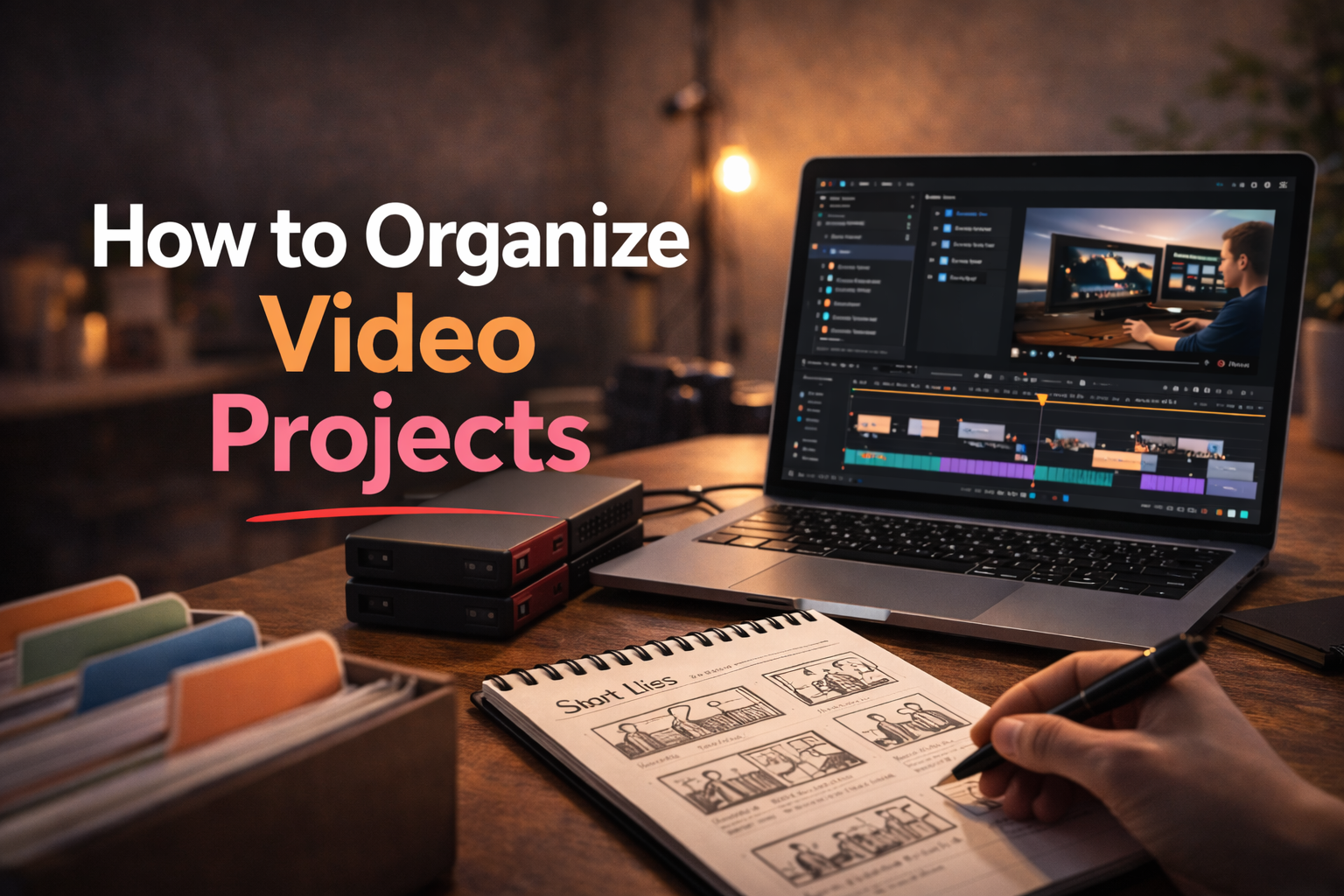
Video projects quickly become difficult to manage when planning, production, editing and publishing all happen in different places. The more projects you handle, the more important organization becomes.
A clear structure helps creators and teams know what each project needs, what stage it is in and what should happen next.
In this guide, you will learn how to organize video projects in a way that supports visibility, consistency and smoother production.
Summary
- Why project organization matters
- How to structure video projects by stage
- How to track progress clearly
- How to reduce production confusion
- How to keep projects manageable over time
Why video projects need structure
A single video already includes multiple moving parts: ideas, scripts, shot lists, raw footage, edits, thumbnails and publishing assets. Once several projects run in parallel, the lack of structure becomes a real problem.
Organization is what gives visibility to the process. It lets you see what is active, what is blocked and what is close to being finished.
- It improves project visibility
- It reduces duplicated work
- It makes team collaboration easier
- It helps maintain publishing consistency
Use clear project stages
The easiest way to organize video projects is to separate them by stage. This turns production into a visible pipeline instead of a vague to-do list.
- Idea
- Planned
- Scripted
- Ready to film
- Editing
- Ready to publish
- Published
This type of structure works well for solo creators and also for teams because everyone understands where the project stands.
Keep all project information together
One of the biggest organization problems comes from splitting information across too many tools. Ideas may be in notes, scripts in documents, footage in folders and publishing tasks somewhere else entirely.
The more fragmented the workflow becomes, the harder it is to keep projects moving smoothly.
The best project organization system is the one that makes every next action obvious.
Use naming and status conventions
Consistent naming makes projects easier to find and easier to understand. This matters even more when you work with recurring formats, multiple platforms or a team.
- Use clear project titles
- Define a status for every project
- Separate active projects from archived ones
- Keep publishing information attached to the project
Plan around deadlines and publishing goals
Organization becomes stronger when projects are connected to a real publishing rhythm. Instead of creating content randomly, you build around upcoming releases and priorities.
This helps you decide which projects matter most and reduces the risk of starting too many things without finishing them.
“A project becomes easier to finish when its stage, priority and next action are all visible.”
Common project organization mistakes
- Managing projects across too many disconnected tools
- Not defining clear statuses
- Mixing ideas and active projects together
- Ignoring publishing deadlines until the end
- Keeping project information incomplete
How Peliku helps organize video projects
Peliku helps creators and teams structure video projects clearly from idea to publishing. Instead of manually rebuilding the workflow every time, you can keep projects, stages and planning steps connected.
This makes production easier to track and much easier to scale over time.
Conclusion
Organizing video projects is not only about order. It is about reducing friction so content can move through the workflow more easily.
When projects are structured clearly, creators spend less time searching, guessing or restarting and more time actually producing and publishing.
Organize your video projects
Keep ideas, stages and production visibility in one place with Peliku.